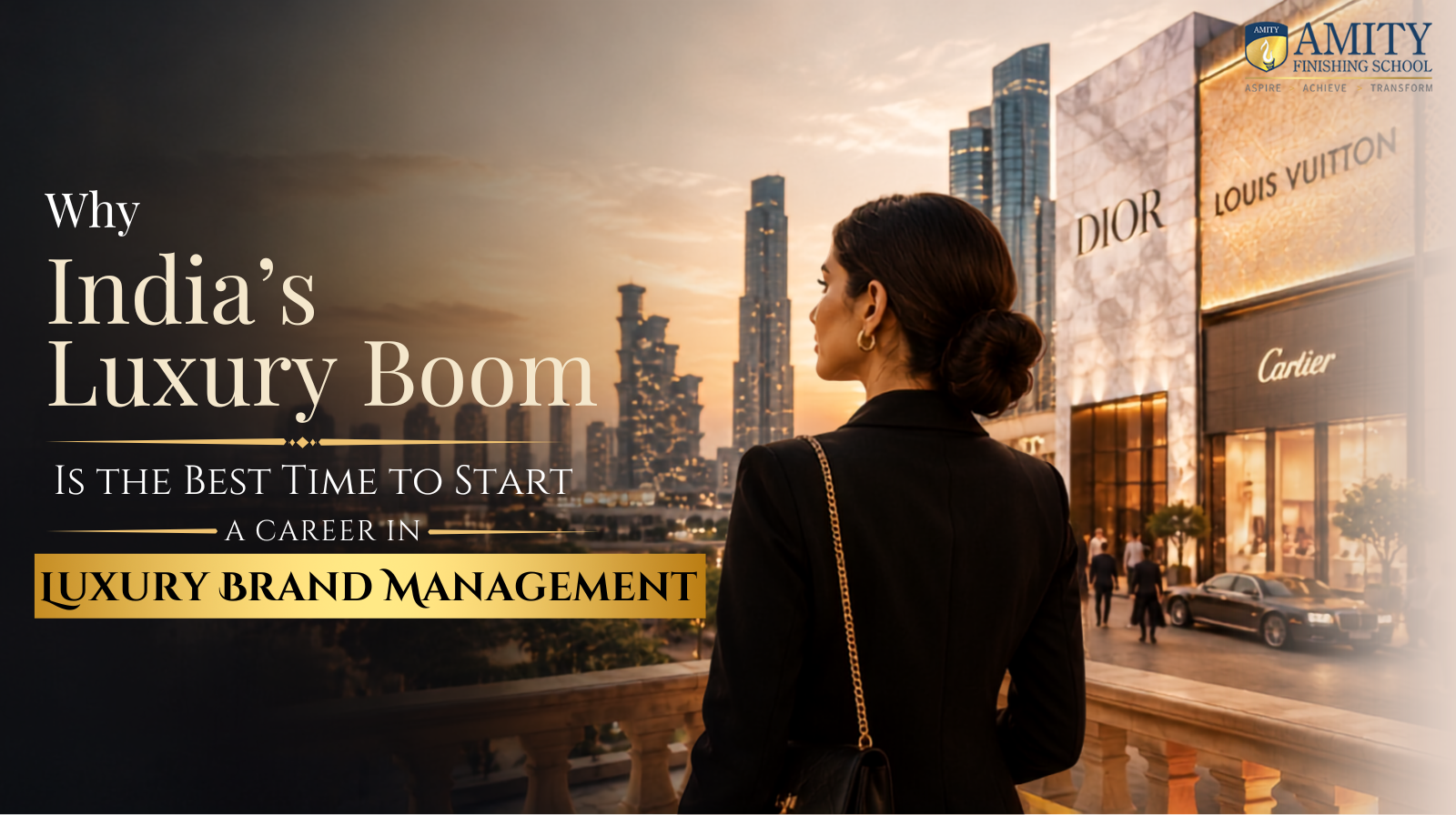
India's luxury market is transforming at speed. Here is what that means for your career and why the window to enter is right now.
In 2015, if you told someone you wanted to build a career in luxury brand management in India, the standard response would have been some version of 'there is not enough market here yet.' That response no longer applies.
India's luxury sector has undergone a structural shift- not just growth, but a change in the nature of the market itself. For anyone considering a career in this space, that shift creates an opportunity that did not exist even five years ago.
What is actually happening in India's luxury market
India is now being described by global luxury houses as one of their most strategically important markets for the next decade. Several forces are converging at once:
-
India's high-net-worth individual population is growing faster than almost anywhere else in the world. More people with serious disposable income means more genuine luxury.
- India is seeing a resurgence of pride in domestic luxury. Brands like Sabyasachi, Raw Mango, Tilfi, and Bvlgari's India-exclusive collections signal a market that is maturing beyond imported logos and developing its own luxury identity.
- Luxury retail infrastructure is expanding rapidly from standalone flagships in Delhi and Mumbai to dedicated luxury wings in Jio World Plaza, luxury e-commerce platforms. The imminent arrival of brands that have not previously had an India presence.
- Indian luxury consumers are getting younger. The average age of a luxury buyer in India is significantly younger than in Europe, which means a much longer purchasing lifetime and a very different set of expectations around digital engagement, experience, and personalisation.
What this means for careers
Every luxury brand entering or expanding in India needs Indian talent. Not expats. Not generalists. People who understand the Indian high-net-worth consumer, who can manage a premium retail environment, who can communicate with sophistication, and who know how a luxury brand thinks.
The profile that is culturally fluent, professionally polished, luxury-trained, is exactly what programmes like the PG Diploma in Luxury Brand Management are designed to produce.
The brands are arriving. The retail spaces are opening. The demand for trained luxury professionals in India has never been higher.
The timing advantage
In any growing industry, the professionals who build expertise early become the ones who lead the sector a decade later. The people entering luxury brand management in India in 2025 and 2026 are doing so at exactly the right moment when the market is large enough to support serious careers but young enough that early entrants still have a real advantage.
In ten years, the Indian luxury sector will be fully mature. The roles that will be available at that point- regional directors, brand managers for flagship stores, heads of client experience for international houses. They will largely be filled by people who started building their careers right now.
How Amity Finishing School connects you to this moment
The PG Diploma in Luxury Brand Management at Amity Finishing School was built for this exact context. The programme's placement partners including Chanel, Berluti, Aquazzura, Mercedes, Bath & Body Works, and a growing list of Indian luxury brands. They reflect the range of the current Indian luxury landscape. The curriculum covers both global luxury brand theory and the specific consumer dynamics of the Indian market.
The finishing school component: etiquette, image management, personal branding, communication skills, emotional intelligence prepares students not just to work in luxury but to genuinely embody it.
The bottom line
India's luxury boom is not a bubble. It is a structural transformation driven by demographic change, economic growth, and a cultural shift in how Indians think about quality, heritage, and aspiration.
If you are considering a career in this space, the best time to have started was three years ago. The second best time is now.